Repmold Guide: How It Works and Why People Are Talking About It
Introduction
In today’s fast-changing digital and industrial landscape, new concepts, systems, and frameworks appear regularly, each promising to improve efficiency, creativity, automation, or productivity. One term that has recently started gaining attention is repmold. While many people are still discovering what repmold actually means, discussions around the topic have grown across technology communities, business forums, manufacturing conversations, and digital workflow circles.
The reason people are talking about repmold is simple: it represents a flexible and adaptable approach to solving repetitive structural, operational, or design-related challenges. Depending on the context, repmold can refer to a process, framework, methodology, or conceptual system used to streamline workflows, improve replication accuracy, reduce inefficiencies, and create scalable solutions.
As industries continue moving toward automation, smarter systems, and modular operations, concepts like repmold naturally become more valuable. Businesses want systems that are repeatable, reliable, and easy to scale without sacrificing quality. Developers want frameworks that reduce unnecessary complexity. Creative professionals want repeatable systems that still allow flexibility. Repmold appears to sit at the intersection of all these goals.
This guide explores what repmold is, how it works, why it is becoming increasingly popular, and where it may fit into the future of technology, production, digital systems, and business operations.
What Is Repmold?
At its core, repmold is commonly understood as a structured replication and molding process designed to improve consistency, adaptability, and efficiency. The term itself appears to combine ideas related to “replication” and “molding,” which helps explain its broader purpose.
Replication is important because modern systems rely heavily on repeatable success. Whether someone is producing digital assets, manufacturing components, software frameworks, marketing systems, or operational procedures, consistency matters. Meanwhile, molding refers to shaping or adapting a process according to a desired structure or objective.
Together, repmold can describe a system that allows users to create repeatable structures while maintaining the flexibility to adapt them to different environments or goals.
This is why the concept is attracting attention across multiple industries. Unlike rigid systems that force organizations into one fixed method, repmold-based approaches often emphasize modularity, customization, scalability, and efficiency.
For example, in digital environments, repmold may involve reusable workflow structures or scalable content frameworks. In manufacturing, it may relate to repeatable production models or precision design systems. In business operations, it can represent standardized yet adaptable procedures that improve productivity while reducing errors.
One reason the term remains somewhat open-ended is because it is still evolving. Many emerging concepts begin as niche technical ideas before becoming more universally defined over time. Repmold appears to be following a similar path.
How Repmold Works
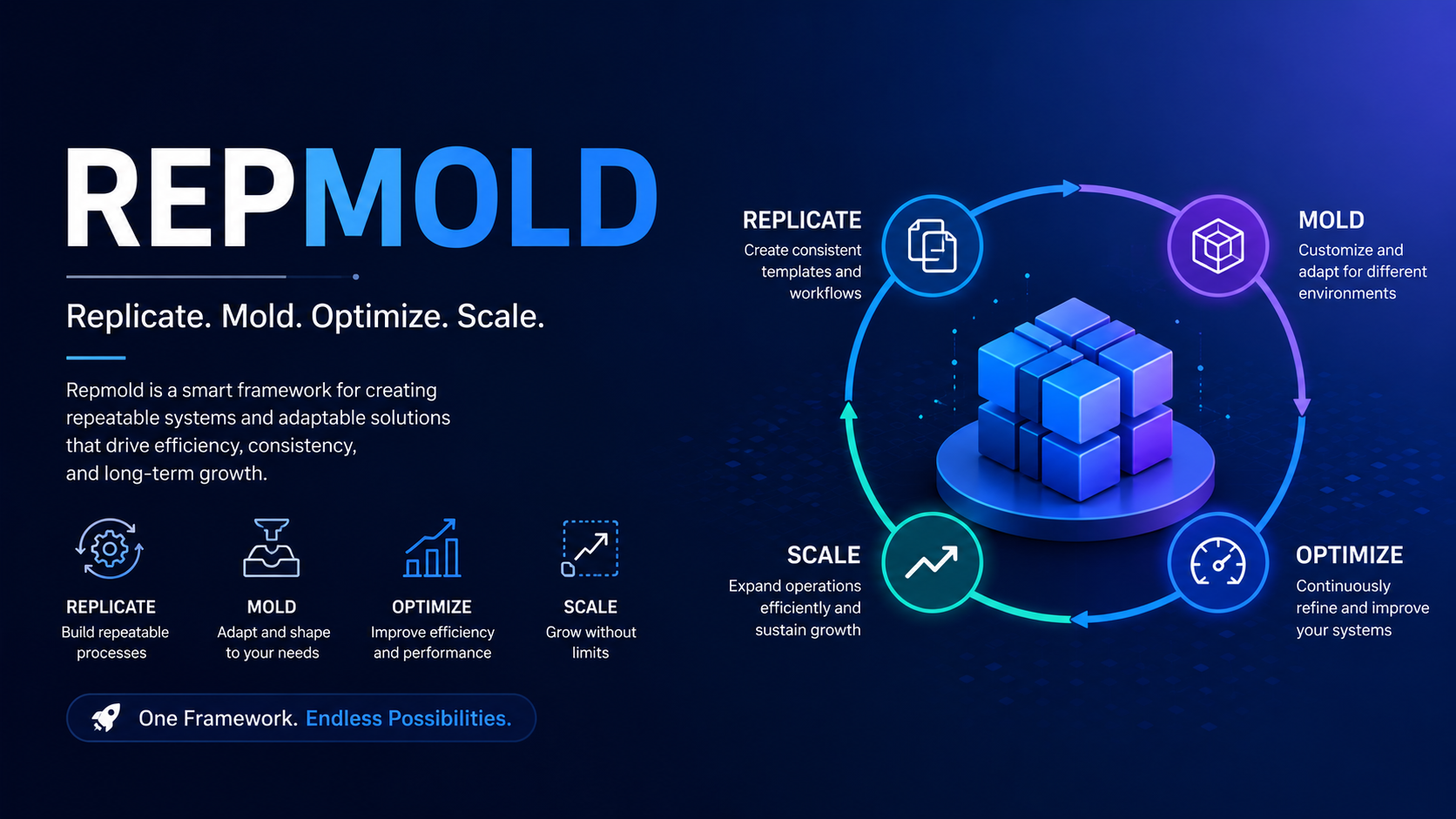
Understanding how repmold works requires understanding the principles behind repeatable systems. Although implementation may differ depending on the industry, most repmold structures follow several common stages.
The first stage is template creation. A reliable base structure is developed that can serve as the foundation for future replication. This template could be a digital process, a manufacturing model, a software structure, or an operational workflow.
The second stage involves adaptation and molding. Instead of using a rigid duplicate every time, the system allows modifications based on unique requirements. This flexibility is one of the biggest reasons why people prefer modern modular frameworks over traditional fixed systems.
The third stage focuses on automation and consistency. Once a template has been tested and refined, it can be replicated repeatedly with reduced manual intervention. This lowers costs, minimizes human error, and improves speed.
The final stage is optimization and scaling. As the repmold system continues operating, data and performance feedback can be used to refine the structure further. This creates a cycle of continuous improvement.
For example, imagine a content production team that creates articles, marketing campaigns, and visual assets. Without structure, every project starts from scratch. A repmold-style framework allows the team to build reusable systems that maintain branding consistency while still adapting to different campaigns or audiences.
Similarly, a manufacturing company could use repmold principles to produce standardized components efficiently while allowing small design modifications for different product variations.
The overall goal is not simply copying processes. Instead, it is about creating intelligent replication systems that remain flexible and scalable.
Why Repmold Is Becoming Popular
The rising popularity of repmold is closely connected to the growing demand for efficiency and adaptability. Modern businesses and digital creators face enormous pressure to produce more work in less time while maintaining quality.
Traditional systems often fail because they are either too rigid or too chaotic. Highly rigid systems reduce creativity and adaptability, while unstructured systems lead to inefficiency and inconsistency. Repmold offers a middle ground.
Several major trends are contributing to its popularity:
Increased Automation
Automation has become central to modern business operations. Companies now automate customer support, marketing workflows, manufacturing processes, analytics, and data management. Repmold aligns naturally with automation because it relies on structured repeatability.
Scalability Demands
Businesses want growth without dramatically increasing costs. Scalable systems are essential for expansion, and repmold frameworks help organizations duplicate successful processes efficiently.
Digital Transformation
As more industries adopt digital tools, there is a stronger need for modular systems that integrate smoothly with changing technologies. Repmold supports this adaptability.
Workflow Optimization
Teams constantly look for ways to reduce wasted effort. Repmold-based methods eliminate unnecessary duplication while improving organization and consistency.
Flexible Frameworks
Modern organizations no longer want one-size-fits-all solutions. Flexible frameworks are preferred because they allow customization without rebuilding systems entirely from the beginning.
These factors collectively explain why repmold is gaining traction in conversations about productivity, technology, design systems, automation, and operational efficiency.
Applications of Repmold in Different Industries
One of the most interesting aspects of repmold is its versatility. The concept can be applied across multiple sectors, making it relevant to businesses, developers, manufacturers, marketers, and creative professionals.
Manufacturing
In manufacturing, repmold principles help streamline production processes by creating repeatable systems that maintain quality control. Standardized molds, modular production methods, and scalable assembly workflows all reflect repmold-style thinking.
Manufacturers benefit because production becomes faster, more cost-effective, and easier to scale.
Software Development
Software teams often rely on reusable code libraries, modular frameworks, and development templates. These systems reduce repetitive coding work and improve consistency across projects.
Repmold approaches in software engineering help teams deploy applications more efficiently while maintaining adaptability for future upgrades.
Content Creation
Digital publishers and marketing agencies increasingly use reusable content frameworks. Editorial systems, SEO templates, campaign structures, and workflow automation tools are examples of repmold-inspired methods.
This helps creators maintain productivity without sacrificing quality or branding consistency.
Business Operations
Companies frequently implement standardized operational systems for onboarding, reporting, communication, customer support, and project management.
Repmold-based operational models improve organization and make scaling easier for growing businesses.
Product Design
Designers use repeatable frameworks to create products faster while maintaining visual and functional consistency. Design systems, UI libraries, and modular product structures all support repmold principles.
Key Benefits of Repmold
The increasing attention around repmold is largely driven by its practical advantages. Businesses and professionals are drawn toward systems that deliver measurable improvements.
Improved Efficiency
Repmold eliminates unnecessary repetition by creating reusable structures. This saves time and reduces manual effort.
Better Consistency
Standardized systems ensure that products, workflows, or outputs maintain reliable quality standards across multiple implementations.
Greater Scalability
Organizations can expand operations more smoothly because repeatable frameworks simplify growth.
Reduced Costs
By minimizing redundant work and improving workflow efficiency, repmold can help lower operational expenses.
Easier Collaboration
Structured systems improve communication between teams because everyone follows a shared framework.
Adaptability
Unlike rigid systems, repmold frameworks often support customization and evolution over time.
Faster Innovation
When foundational structures already exist, teams can focus more energy on innovation rather than rebuilding basic processes repeatedly.
These benefits explain why industries increasingly explore repeatable modular systems as part of their long-term operational strategies.
Challenges and Limitations of Repmold
Although repmold offers many advantages, it is not without limitations. Like any operational framework, success depends heavily on implementation quality.
One common challenge is over-standardization. If systems become too rigid, creativity and adaptability may suffer. Organizations must balance structure with flexibility.
Another issue involves initial setup complexity. Designing an effective repmold system requires planning, testing, and optimization. Poorly designed templates may create inefficiencies instead of solving them.
There is also the challenge of maintenance. As industries evolve, frameworks must adapt. Static systems quickly become outdated if they are not regularly improved.
In some cases, organizations may rely too heavily on replication and fail to encourage innovation. Teams still need room for experimentation and creative problem-solving.
Additionally, implementing new structured systems often requires employee training and organizational adjustments. Resistance to change can slow adoption.
Despite these challenges, many organizations believe the long-term advantages outweigh the difficulties, especially when systems are carefully designed and continuously refined.
The Future of Repmold
The future of repmold appears closely connected to automation, artificial intelligence, modular systems, and digital scalability.
As businesses increasingly depend on AI-powered workflows, repeatable intelligent frameworks will become even more important. Repmold-style systems may evolve into adaptive infrastructures capable of learning and optimizing themselves automatically.
Several emerging trends may shape the future of repmold:
AI Integration
Artificial intelligence can improve replication accuracy, automate optimization, and identify workflow inefficiencies in real time.
Smart Modular Systems
Future systems will likely become more modular, allowing organizations to customize structures instantly without rebuilding entire processes.
Cloud-Based Collaboration
Remote work and distributed teams increase demand for centralized frameworks that maintain operational consistency across global environments.
Personalized Automation
Businesses increasingly want automation systems tailored to unique operational needs. Repmold concepts support this personalization.
Industry Standardization
As repmold principles mature, they may eventually become standardized best practices within specific industries.
The concept may still be developing, but its alignment with future business and technology trends suggests strong long-term relevance.
How Businesses Can Use Repmold Strategically
Organizations interested in repmold should focus on strategic implementation rather than blindly copying trends.
The first step is identifying repetitive processes that consume significant time or resources. Businesses should analyze workflows carefully to determine where structured replication could improve efficiency.
Next, organizations should create modular systems instead of rigid templates. Flexibility is essential because industries and customer expectations evolve constantly.
Testing and optimization are also critical. Repmold systems should be continuously refined based on performance data and user feedback.
Employee involvement matters as well. Teams are more likely to adopt structured systems successfully when they understand the benefits and participate in the design process.
Businesses should also prioritize scalability from the beginning. Effective repmold systems should support future growth without requiring complete redesigns later.
Finally, organizations should avoid treating repmold as a replacement for creativity. Structured systems work best when they support innovation rather than limiting it.
Common Misunderstandings About Repmold
Because repmold is still an emerging concept, several misconceptions exist around it.
One common misunderstanding is that repmold simply means copying systems repeatedly without change. In reality, adaptability is one of its defining features. The “mold” aspect emphasizes shaping systems according to different requirements.
Another misconception is that repmold only applies to manufacturing. While manufacturing reflects many repmold principles, the concept extends far beyond physical production.
Some people also assume that structured frameworks reduce originality. However, many successful creative industries rely heavily on repeatable systems behind the scenes while still producing highly innovative work.
There is also confusion regarding automation. Repmold does not necessarily eliminate human involvement. Instead, it often reduces repetitive manual work so people can focus on higher-value tasks.
Understanding these distinctions is important because the real value of repmold lies in intelligent structure rather than simple duplication.
Conclusion
Repmold is gaining attention because it reflects the growing need for repeatable, scalable, and adaptable systems in modern industries. Whether applied to manufacturing, software development, content creation, business operations, or digital infrastructure, the core idea remains the same: create structured frameworks that improve efficiency while remaining flexible enough to evolve.
The increasing complexity of modern workflows has made traditional rigid systems less effective. Organizations now require solutions that balance automation with customization, consistency with creativity, and scalability with adaptability. Repmold appears to address many of these needs.
Although the concept is still evolving, its underlying principles already align closely with major technological and operational trends shaping the future. Automation, AI integration, modular workflows, cloud collaboration, and scalable digital systems all support the growing relevance of repmold.
For businesses and professionals looking to improve productivity without sacrificing flexibility, understanding repmold may become increasingly valuable in the years ahead. As industries continue evolving, systems built around intelligent replication and adaptable structures are likely to play a major role in how organizations operate, innovate, and grow.
Bigshub.co.uk




Post Comment